
Swedish Radiation Protection Foundation – 12jan2026.
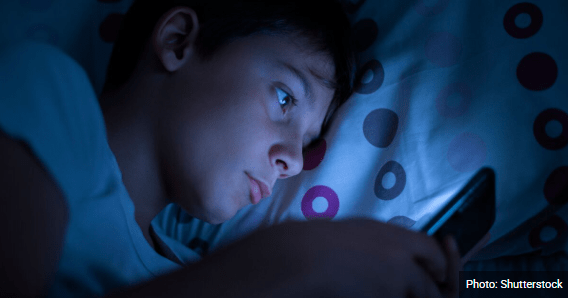
In January 2026, a Swedish registry based study was published showing a sharp increase in diagnosed sleep problems in Sweden. The number of children and adolescents aged 5–19 years that received a sleep disorder diagnosis increased seventeen-fold between 2001 and 2024.
The investigation was carried out by Mona Nilsson from the Swedish Radiation Protection Foundation and oncologist/epidemiologist Lennart Hardell from the Environment and Cancer Research Foundation. It is based on official statistics from the Swedish National Board of Health and Welfare’s patient registry and was published in the scientific journal Diseases on January 8, 2026. Statistics on the number of patients in different age groups who received a diagnosis of sleep disorder (ICD-10 code G47) in specialized outpatient care between 2001 and 2024 were analyzed. The results showed that:
- Among children aged 0–4 years, the number of diagnosed sleep disorders increased fivefold during the period, from 41.5 per 100,000 inhabitants in 2001 to 215.8 in 2024.
- For children and adolescents aged 5–19 years, the increase was even more dramatic—approximately 17-fold, from 13.8 per 100,000 inhabitants in 2001 to 235.6 in 2024.
- Young adults aged 20–39 years also showed a strong increase, from 40.4 per 100,000 inhabitants in 2001 to 220.9 in 2024.
Graphs show the sharp increase
Below are graphs from the published article showing the number of patients per 100,000 inhabitants in the different age groups who each year between 2001 and 2024 received a diagnosis of sleep disorders (G47).
Diagram 1. Number of boys (yellow), girls (blue), and both sexes combined, aged 0–4 years, per 100,000 inhabitants, who received a diagnosis of sleep disorders (G47) each year between 2001 and 2024.
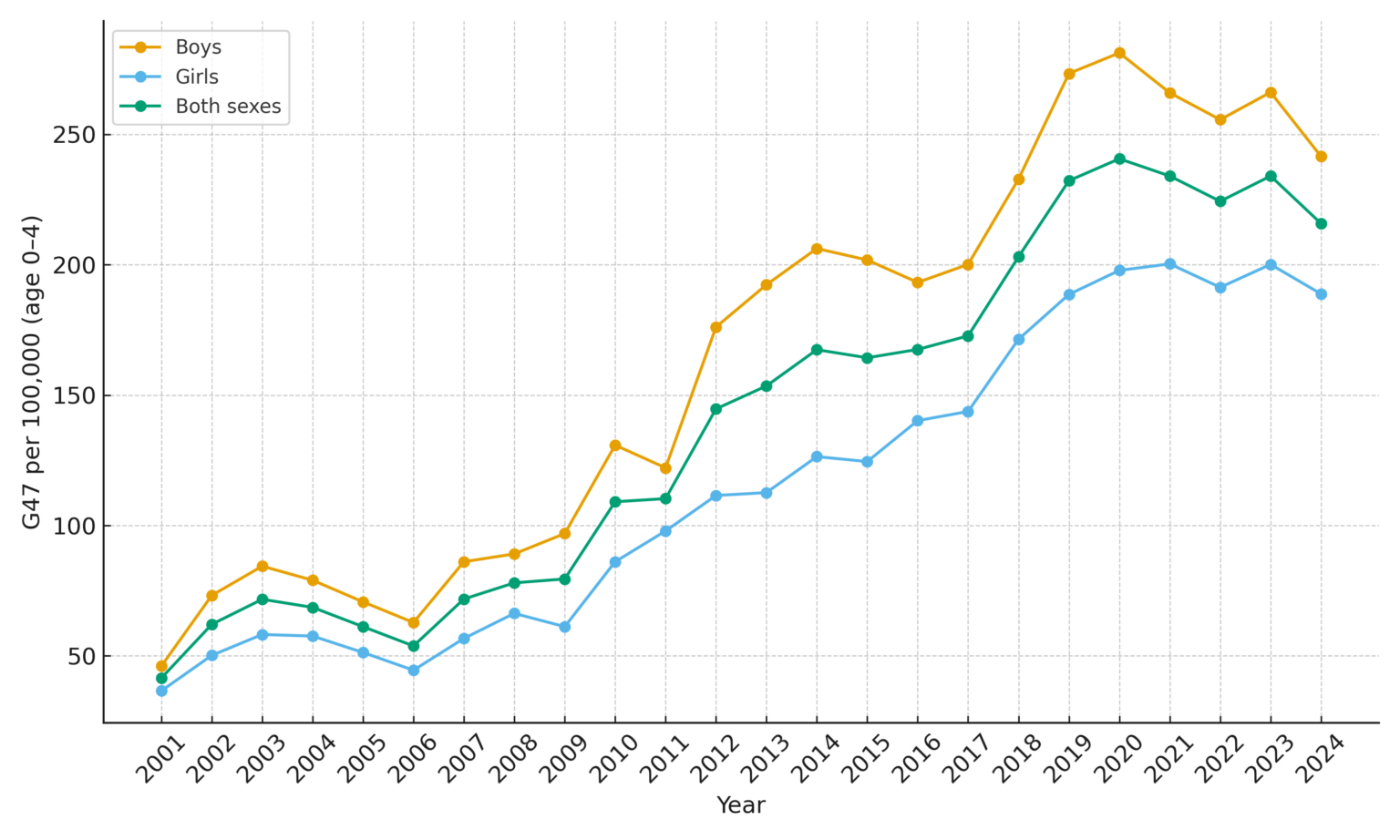
Diagram 2. Number of boys (yellow), girls (blue), and both sexes combined, aged 5–19 years, per 100,000 inhabitants, who received a diagnosis of sleep disorders (G47) each year between 2001 and 2024.
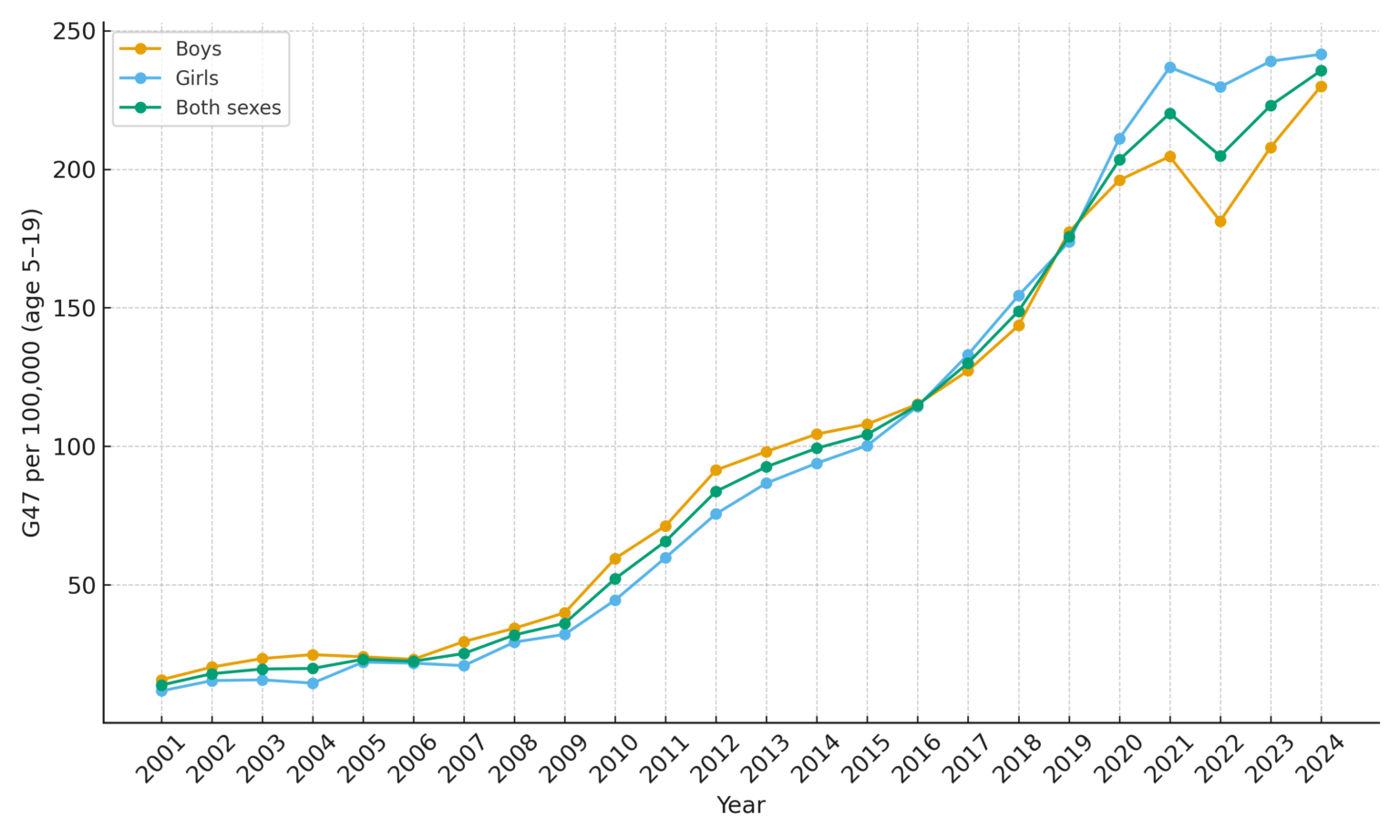
Diagram 3. Number of men (yellow), women (blue), and both sexes combined, aged 20–39 years, per 100,000 inhabitants, who received a diagnosis of sleep disorders (G47) each year between 2001 and 2024.
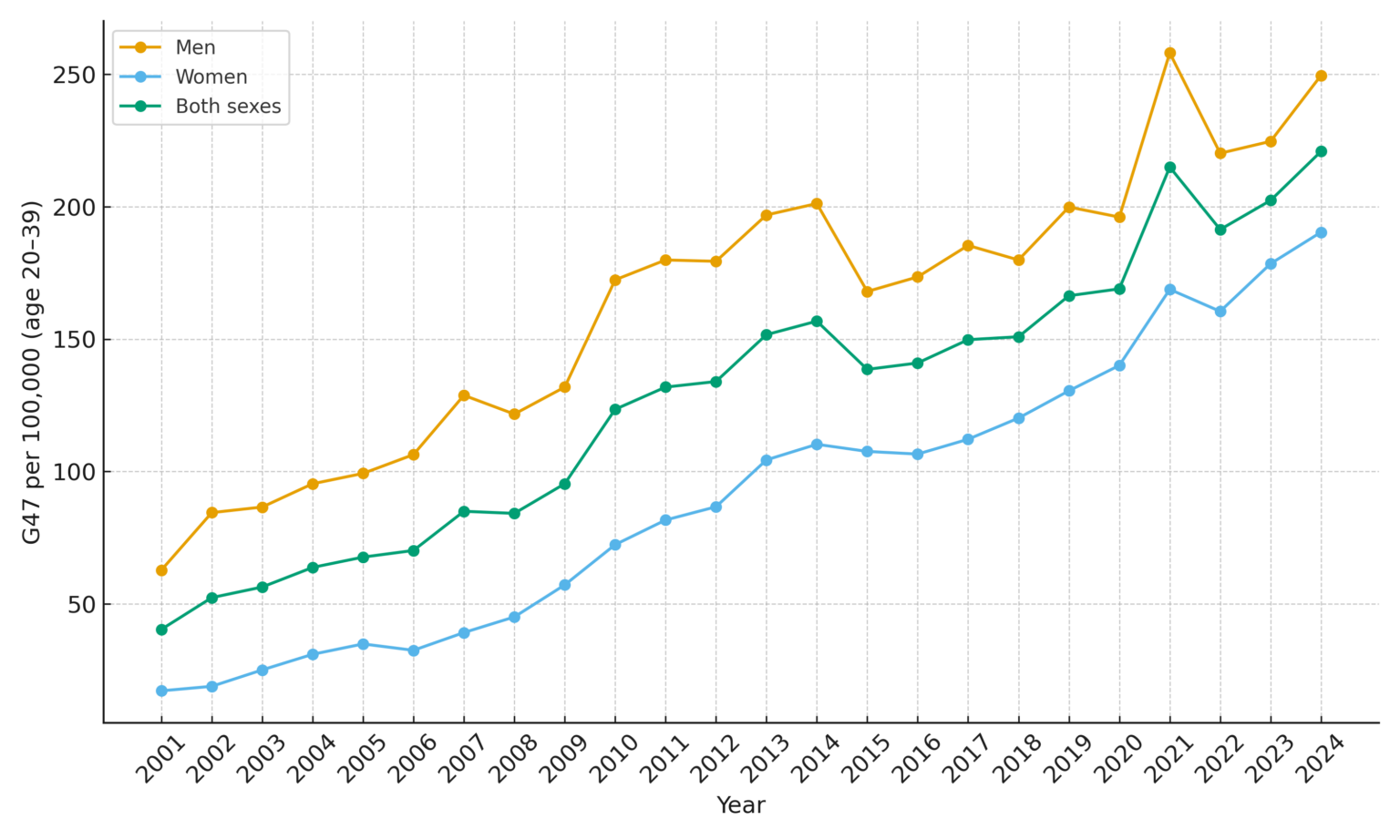
Older age groups also showed somewhat more sleep problems over time, but the increase was considerably smaller than among children and young people.
The strongest increase in the 0–19-year-old age groups occurred after 2009–2010. The Swedish National Board of Health and Welfare notes that the number of registered patients may be underreported during the first years after the patient registry’s launch in 2001; however, the increase observed here occurs mainly almost ten years later.
Nilsson and Hardell also emphasize that statistics on medication use show that sleep problems among children and adolescents increased during the same period. Prescriptions of sleep medication for children and adolescents aged 0–19 years increased from 16,102 patients in 2011 to 112,000 in 2024, meaning that seven times more patients in this age group received sleep medication in 2024 compared with 2011.
What is causing the increase in sleep problems?
In the published scientific article, the background to the registry study is presented. Repeated research over several decades has shown that radiation similar to that emitted from mobile phone base stations, mobile phones, Wi-Fi routers, and other wireless technologies can negatively affect sleep. As early as in the 1960s and 1970s, scientific articles were published showing that people occupationally exposed to microwave radiation—similar to that emitted by modern telecommunications technology—suffered to a greater extent from, among other things, sleep problems.
The majority of studies investigating the health status of people living near mobile phone base stations have also shown that a range of symptoms—referred to as the microwave syndrome—including sleep problems, were more common among those most exposed to base stations. For example, a study from India in 2025 showed that over 90% of those with the highest exposure to mobile phone radiation suffered from sleep problems, despite the radiation levels being far below the ICNIRP and the FCC:s limits deemed “safe” by those organizations and the telecommunications industry: a maximum of 8,000 microwatts per square meter in the study from India compared with ICNIRP and FCC limit of 10,000,000 microwatts per square meter).
In addition, in previous case studies of individuals exposed to microwave radiation from 5G base stations or masts located close to their homes, Mona Nilsson and Lennart Hardell showed that sleep problems were the most common symptom among the 16 participants, and that the children included in the case studies were also affected by sleep problems.
In the newly published article, a number of additional studies are presented that also show that microwaves from telecommunications technology negatively affect sleep.
Simultaneous increase in radiation exposure
The authors also point out that children’s and adolescents’ increasing exposure to radiation from wireless technology coincides in time with the increasing sleep problems, for example:
- A sharp increase in the use of smartphones, especially among children and young people since 2009/2010
- Increased whole-body exposure to microwaves from wireless technologies, such as Wi-Fi, mobile networks (4G and later 5G), and smartphones
The fact that blue light from screens can impair sleep is also mentioned as a potential contributing factor.
The increasing sleep problems among children, adolescents, and young adults constitute a serious public health problem. Sleep problems have been described by researchers as a growing global public health issue. Research links long-term sleep deprivation to many secondary diseases.
When sleep problems increase so rapidly in large parts of the population—and especially among children, adolescents, and young adults—it is a sign that something in our living environment or lifestyle is harmful.
Memory problems are also increasing
Nilsson and Hardell also point out that a previous registry study showed that memory problems increased sharply among children and adolescents aged 5–19 years during the same period in which sleep problems increased among children and adolescents. Research has repeatedly shown that microwave radiation from telecommunications technology damages the brain and memory. The Swedish Radiation Protection Foundation has compiled nearly 60 studies, all of which show harmful effects on memory.
Mona Nilsson states:
If the assessments by ICNIRP, FCC, WHO and EU were correct—that is, that this radiation does not cause symptoms such as sleep disturbances and memory problems—then we should not see this sharp increase coinciding with a dramatic rise in the exposure. But instead, we see that what researchers have shown in scientific studies is also occurring in reality. The harmful effects on the brain and nervous system that researchers have repeatedly observed and reported must be taken seriously and transformed into action to better protect the human brain.
Lennart Hardell adds:
Our results, which show a sharp increase in sleep problems especially among children and young people, must be taken seriously. As we discuss in the article, a likely major contributing cause is the strong increase in exposure to radiofrequency fields from wireless communication, which coincides with the increase in sleep difficulties. Unlike the risk of cancer, sleep disturbances occur in the short term. Cancer develops over a long time, often several decades. Current knowledge suggests that in addition to the acute effects such as sleep difficulties, there is a significant risk of increased cancer incidence in the long term. In addition to brain tumors, this has also been clearly shown for cancer of the thyroid gland.
References
Nilsson, M.; Hardell, L.; Increasing Numbers of Persons with Sleeping Problems in Sweden; Diseases 2026, 14(1), 25; https://doi.org/10.3390/diseases14010025
Nilsson, M.; Hardell, L. Increasing numbers of children aged 5–19 years with memory problems in Sweden and Norway. Arch. Clin. Biomed. Res. 2025, 9, 431–439
Source – Swedish Radiation Protection Foundation – Increasing numbers of children and young adults in Sweden diagnosed with sleep problems
