
Environmental Health Trust – 04mar2026.
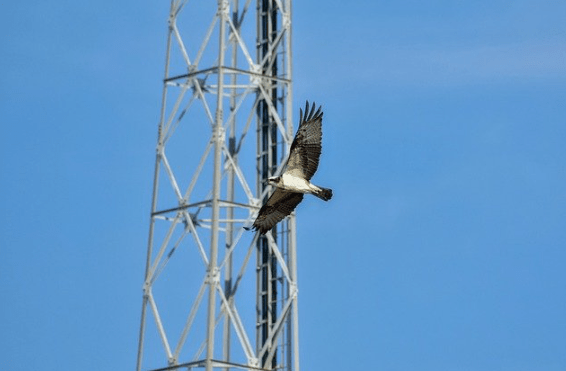
A study recently published in Frontiers in Public Health digs deep into how birds, insects, fish, and even trees can experience negative and pervasive impacts from electromagnetic interference — and what policy changes ought to be implemented to mitigate these effects.
Note: This is one of several academic articles to come out of EHT’s 2024 International Expert Symposium on Wireless Radiation Exposure, held at Yale University School of Medicine. Read the full article.
How Man-Made EMFs Are Impacting Non-Human Life on the Planet
Compared to humans, other species have exceptionally sensitive electro/magneto-receptors, and today’s exposure levels are capable, even at very low intensities, of disrupting these functions. The authors of Flora and fauna: How nonhuman species interact with natural and man-made EMF at ecosystem levels, and public policy recommendations explain that all living things evolved alongside the Earth’s static magnetic field — the one that helps birds migrate and sea turtles find their way home — and the RF-EMF produced by cell phones, satellite mega-constellations, Wi-Fi, and other wireless tech is now interrupting the magnetic environment that animals and insects need to navigate, mate, hunt, and grow. Radiation from wireless technology has been connected to reproductive problems, permeability of the blood brain barrier, stress protein increases, metabolic issues, and increases in cancer risk.
Unlike natural geomagnetic fields, these artificial EMF exposures are changing too rapidly to allow living organisms to adjust. Species simply don’t have time to adapt or evolve with them.
The authors point to various ways that plant life reacts to the man-made frequencies as well. Yale researcher Dr. Harold Saxon Burr demonstrated decades ago that trees are more sensitive to their electrical environment than to meteorological or atmospheric changes; more recently, scientists in Europe have documented progressive defoliation and tree dieback adjacent to cell towers and antennas.
The detrimental effects on plant life are further impacted by insect mortality and pollination changes brought about by man-made radiation. The article cites adverse ecological impacts that have been demonstrated in honey bees exposed to ELF-EMF: California poppy plants near high-tension powerlines receive fewer floral visits by honey bees, resulting in reduced seed production and fewer plants.
These changes in pollination are serious; insect mortality alone is capable of punching holes in the entire food web. Human food supply is put in danger by this technology.
What Policy Changes Could Make a Difference?
In the United States, the Federal Communications Commission (FCC), the Food and Drug Administration (FDA), the Environmental Protection Agency (EPA), and other agencies have jurisdictional authorities regarding RF exposure standards. The FCC is supposed to take guidance from expert health and environmental agencies (like FDA and EPA) before finalizing standards, but these U.S. agencies have historically not conducted or acknowledged serious scientific research, falling behind other countries who have. One damaging result is that the FCC has allowed wireless and satellite networks to be largely excluded from environmental review, delegating oversight of emissions to industry players whose first priority is to protect their financial interests.
Rapid expansion of wireless technologies has happened with almost no environmental review; there are no effective EMF exposure guidelines or standards for wildlife in the U.S.. (Although the EPA is effectively allowed by statute to regulate EMF as a pollutant and the FDA is effectively allowed to regulate it as an ingredient.) The current regulatory framework is insufficient to protect humans, and even less equipped to address nonhuman species.
Currently, of course, the FCC is under a court mandate handed down in EHT vs. FCC, requiring the FCC to address scientific evidence of damage to human health and the environment caused by wireless radiation. The FCC has not yet complied.
Recognize EMF as an Ecological Risk
For progress to be made, the authors assert, there must first be recognition that EMF poses an ecological risk. Air space needs to be recognized as “habitat” for many species, just as water and ground are for species we already protect against various pollutants. Non-ionizing EMF needs to be recognized as a biologically active form of air pollution impacting this habitat, so that pertinent regulatory agencies can regulate it like other pollutants. These actions would provide a legal foundation to assess cumulative EMF impacts and mitigate exposures.
Once EMF is more seriously treated as a pollutant, the following existing laws could be more effectively applied to regulate it:
- The National Environmental Policy Act (NEPA)
- The Migratory Bird Treaty Act
- The Bald and Golden Eagle Protection Act
- The Fish and Wildlife Conservation Act
- The Endangered Species Act
Policymakers in the FCC, EPA, BLM, Fish & Wildlife, Forest Service, and others need to explicitly and rigorously treat EMF emissions as a form of anthropogenic air pollution with ecological consequences. Science-based non-ionizing electromagnetic field exposure limits — including continuous, chronic, low-intensity exposures — should be developed specifically to protect wildlife.
The authors of the article lay out several actions that policymakers could take to make a significant difference in protecting flora and fauna:
- Create intentional EMF-free zones during critical migration and breeding times
- Launch dedicated research to evaluate the biological and ecological impacts of radiofrequency radiation
- Determine what ICRP protection for ionizing radiation could apply to non-ionizing protection
- Maintain at least one EPA bioelectromagnetics scientist to guide programs
- Implement a nationwide EMF monitoring program that prioritizes ecologically sensitive areas
- Independent spot checks of RF levels for wireless facilities
- Setbacks in federal parkland and state protected areas
- Establish low- to no-EMF zones in designated areas with sensitive habitats
- Low earth orbit satellite systems, like StarLink, should be subject to full NEPA reviews for effects to humans, wildlife, and atmospheric perturbations capable of adversely affecting habitat
Some of these recommendations may be actionable, and some may need to be adjusted to accommodate real-world practicalities if they are going to be implemented in the near term. In short, we need to rethink how wireless radiation fits into environmental protection, just as we have for water pollution and pesticides in the past. Regulatory agencies must adopt science-based limits that take ambient, low-intensity exposures into consideration. The survival of countless species depends on it.
Flora and fauna: How nonhuman species interact with natural and man-made EMF at ecosystem levels, and public policy recommendations was written by B. Blake Levitt, Dr. Albert M. Manville II, Dr. Henry C. Lai, and Theodora Scarato, published in Frontiers in Public Health, 19 November 2025.
Source – Environmental Health Trust – How Man-Made EMFs Are Impacting Other Species – A Symposium Report

