
EMR Australia – Lyn McLean, 22aug2026.
Are you in the market for a new smart car? If so, here are some things it’s important to know.
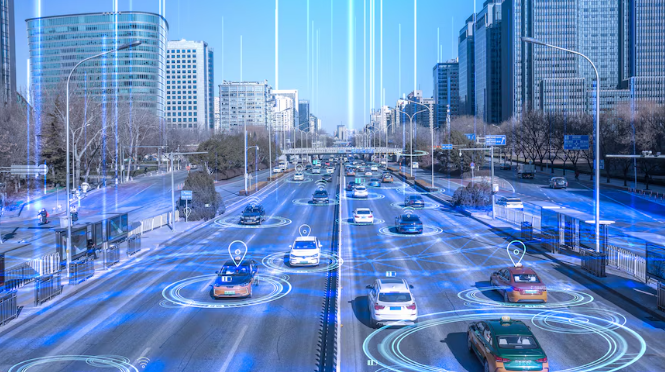
When it comes to technology, the word ‘smart’ has nothing to do with intelligence. It doesn’t mean that the technology or the user is clever in any way. ‘S.M.A.R.T.’ stands for Self-Monitoring, Analysis and Reporting Technology – in other words, technology that collects data and transmits it, whether the driver knows about it or not.
Smart cars do this using wireless technology – from smart phone connections, cameras, vehicle to vehicle/infrastructure/pedestrian/cloud communications, high-speed video and audio and so on.
These wireless devices emit radiofrequency (wireless) radiation, a Class 2B (possible) carcinogen and which some scientists believe does actually cause cancer. It’s also been linked with harmful effects on the body, such as DNA damage, oxidative stress, changes to cells and hormones, testicular damage, and to symptoms, such as headaches, sleep problems, fatigue, anxiety, pain. Some people are more sensitive than others – such as foetuses, babies, children, people with cancer, the sick, the elderly and the sensitive. Effects are cumulative, so the more a person is exposed, the greater the chances of harm.
If that weren’t worrying enough, many smart cars also emit radar radiation, linked to sperm problems, cancer, sleep problems, anxiety, social dysfunction, depression and so on.
Radar radiation is used for adaptive cruise control, automatic emergency braking, blind spot detection and detecting the speed at which the vehicle approaches cars ahead. It can detect the presence of people in the car and ascertain details about them. It can monitor a person’s vital signs, such as heart rate and respiration and can pass through physical barriers.
And there’s more smart car tech coming. New European regulations require new cars to have ‘Advanced Driver Distraction Warning’ technology that monitor a driver’s face and eye movements.
And what do you think happens to all this data these smart technologies collect?
Privacy risks
Many car companies collect huge amounts of data from car owners, that they share with or sell to third parties and this includes:
- Images and videos
- Voice commands
- Smart phone activity, including contacts and calendar
- Locations
- Driving behaviour (braking, cornering, acceleration, speed, stop sign violations etc)
- Driver focus (blinking, eye tracking, eye orientation etc)
- Vehicle performance (window use, tyre pressure, fuel, emissions, temperature etc)
- Driver and passenger weight
- and sometimes even sex life.
This means that none of the vast amount of data about a driver and passengers that a smart car collects is either private or secure. For example, Kia and Hyundai collected and sold voice recognition data to a company to be used for AI training (1) and workers at Tesla shared sensitive material recorded by car cameras, including videos of naked people, crashes and road rage incidents.(2) According to Choice, ‘Two of Australia’s biggest car brands, Toyota and Hyundai, are under official investigation by the Office of the Australian Information Commissioner (OAIC) for potential breaches of the Privacy Act in their smart connected vehicles. (3)
The privacy threat is so real that ASIO has advised politicians not to discuss sensitive matters in cars with internet connection. (4)
But, if you’re a smart car owner, it’s not just your data that’s at risk. Your smart car can collect data from the person you’re connected to, by phone for example, as well. For example, your car can collect their phone calls and texts, their social media activity and even the music they listen to.
According to the Australian Cyber Security Centre, ‘This data is extracted from every device connected to the vehicle and can be stored permanently by the vehicle manufacturer. The data can be recovered using specialist tools, in some cases without having physical access to the vehicle. (5)
Of course, this data is ripe for the picking by cybercriminals.
‘This data is attractive to cybercriminals, as demonstrated by several large and high-profile data breaches of manufacturers in recent years, the Cyber Security Centre’s website says, ‘Over time, if the automotive industry doesn’t focus on improving cyber security, the ability for cybercriminals to illegally extract this data will likely become widespread.’
The risk of cyberattack is greater for electric cars because EV charging stations are connected to the internet as well as the cars themselves. (6)
Brooke Kidmose, from the Technical University of Denmark, says that when smart cars are driven in smart cities, the dangers are magnified. ‘Malware could spread from smart vehicles to a smart transportation system, infecting all vulnerable smart vehicles in the smart city, and since smart vehicles are inherently mobile, they could transport the malware to the next smart city. Attackers could craft exploits that leverage the vulnerabilities of both smart vehicles and smart cities. (7)
- These car brands are collecting and sharing your data with third parties,
- James Purtill, ABC News, 09.10.24 https://www.abc.net.au/news/science/2024-10-09/car-brands-are-tracking-and-sharing-your-data-with-third-parties/104440742
- Tesla workers shared sensitive images recorded by customer cars,
- Steve Stecklow et al, 07.04.23 https://www.reuters.com/technology/tesla-workers-shared-sensitive-images-recorded-by-customer-cars-2023-04-06/
- Toyota and Hyundai in the hot seat for tracking driver data,
- Don’t Discuss Secrets in cars, ASIO warns MPs,
- Michael Read, Financial Review, 28.05.26 https://www.afr.com/policy/foreign-affairs/don-t-discuss-secrets-in-cars-asio-warns-mps-20260528-p601of
- Australian Cyber Security Centre, 30.06.25
- Australian Cyber Security Centre, 30.06.25
- A review of smart vehicles in smart cities: Dangers, impacts, and the threat landscape,
- Brooke Kidmose, Vehicular Communications, Volume 51 2025, 100871, ISSN 2214-2096, https://doi.org/10.1016/j.vehcom.2024.100871.
Source – EMR Australia – newsletter – Are smart cars a smart choice?
Note LVsA minor format changes and image addition
