
The FCC has 30 days to explain why it hasn’t complied with a 2021 court order requiring the agency to reveal how it determined that current radiofrequency radiation exposure limits adequately protect people and the environment. The ruling stems from a petition Children’s Health Defense filed earlier this year to obtain the information.
CHD by Suzanne Burdick, Ph.D. 26aug2026.
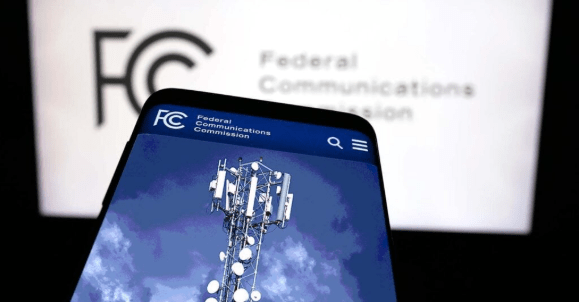
The Federal Communications Commission (FCC) has 30 days to explain why it hasn’t complied with a 2021 court order requiring the agency to reveal how it determined that current wireless radiation exposure limits — which haven’t been updated in 30 years — adequately protect people and the environment, a federal appeals court ruled today.
Within a month, the FCC must respond to a petition filed earlier this year by Children’s Health Defense (CHD) requesting the information.
“This is a huge deal, and we are very pleased with the court’s order,” said Miriam Eckenfels, director of CHD’s Electromagnetic Radiation (EMR) & Wireless Program.
Today’s order by the U.S. Court of Appeals for the District of Columbia Circuit represents a big step toward holding the FCC accountable for its ongoing refusal to protect people and the environment from wireless radiation, Eckenfels said.
“The FCC’s inaction to address the mountain of science on the health impacts of wireless radiation is nothing short of reckless,” she said.
‘This signals that the court is interested in the issue’
In 2019, the FCC chose not to update its 1996 radiofrequency (RF) radiation exposure safety limits and to terminate a legal inquiry into scientific evidence of adverse biological effects of RF radiation.
In response, CHD and other petitioners, including the Environmental Health Trust, sued the FCC. The groups filed 11,000 pages of evidence of harm from 5G and wireless technology — evidence that they alleged the FCC ignored in 2019, when it decided not to update its safety limits.
In 2021, after CHD and the other petitioners’ cases were consolidated into EHT et al. v. FCC, the District of Columbia Circuit sided with CHD.
The 2021 ruling called the FCC’s 2019 decision “arbitrary and capricious” because it failed to consider the non-cancer evidence of adverse health effects caused by wireless technology.
According to the 2021 ruling:
“In addition to the Commission’s inadequate response to the non-cancer-related effects of RF radiation on human health, the Commission also completely failed even to acknowledge, let alone respond to, comments concerning the impact of RF radiation on the environment.” … “That utter lack of a response does not meet the Commission’s obligation to provide a reasoned explanation for terminating the notice of inquiry.”
The court sent the case back to the FCC, ordering the agency “to provide a reasoned explanation for its determination that its guidelines adequately protect against harmful effects of exposure to radiofrequency radiation.”
For the last five years, the FCC has ignored the 2021 court mandate.
On May 18, CHD filed a new federal case asking the District of Columbia Circuit to issue what’s called a Writ of Mandamus directing the FCC to comply with the 2021 mandate within 90 days.
Today’s ruling orders the FCC to respond to CHD’s petition. In answering the petition, the FCC will have to explain why it hasn’t complied with the 2021 order.
That’s a big deal because the court could have chosen to ignore CHD’s petition, said W. Scott McCollough, chief litigator for CHD’s EMR & Wireless cases and the lead attorney for its 2021 victory.
McCollough said, “What’s exciting here is this signals that the court is interested in the issue, and this is a necessary first step in granting the petition.”
After the FCC responds to CHD’s petition, CHD will have the opportunity to reply to the FCC’s response, he said. “The court could require additional briefing or oral argument before ruling on the petition.”
Eckenfels said, “This is an important step in fixing an issue that has been going on for far too long. We need to address the growing public health threat of wireless radiation, with urgency.”
One in 8 U.S. adults reported adverse health effects from exposure to wireless radiation, according to a March peer-reviewed report of nationally representative survey results.
In February, Paul Héroux, Ph.D., authored a report showing how EMR exposure from wireless radiation and electrical power grids is linked to the global diabetes epidemic. The report traces evidence of how EMR can dysregulate and raise blood sugar levels.
Wireless radiation from cellphones can cause abnormal blood clumping, even when the phone is held an inch away from the skin, according to an April 2025 peer-reviewed study.
The study’s author, Dr. Robert Brown, recently wrote “UnPlug: A Radiologist Explores the Damage Caused by Electropollution and How You Can Prevent It.”
FCC working to accelerate wireless rollout
CHD Staff Attorney Risa Evans, who helped write CHD’s petition, said she was pleased that the court is interested in the issue.
“While the FCC has been sitting on its hands and failing to protect the public from harmful levels of wireless radiation, it has been doing all it can to accelerate deployment of wireless infrastructure,” Evans said.
In 2025, the agency proposed a rule that, if adopted, would strip local control over wireless infrastructure and force residents to accept more cell towers in their neighborhoods.
Last month, the FCC adopted a four-fold increase in power limits for wireless devices without first conducting a public health analysis on how the change would increase people’s exposure to RF radiation.
The FCC also took action to end environmental safety reviews for cell towers, Evans said. “In the last week, the FCC has refused to consider the environmental impact of towers in two permitting decisions,” she added.
Related articles in The Defender
- CHD Seeks to Force FCC to Comply With 2021 Ruling
- ‘New Phase of Attack’: CHD Tells FCC to Protect People, or ‘Get Out of the Way’
- FCC Defies Court Mandate, Delays Review of Cellphone Radiation Guidelines
- CHD Petitions FCC to ‘Quit Stalling’ on Court Order to Address Harmful Effects of Wireless Radiation
- ‘Historic Win’: CHD Wins Case Against FCC on Safety Guidelines for 5G and Wireless
- FCC Limits for Wireless Radiation Exposure Decades Out of Date, Experts Say
Suzanne Burdick, Ph.D., is a senior reporter for The Defender based in Austin, Texas.
Source – CHD – Court Gives FCC 30 Days to Respond to CHD Petition on Wireless Harms
Swiss Physicians for Environmental Protection. – AefU – MfE “In accordance with the precautionary principle, the current (EMF) limit values in Switzerland are too high. We call on politicians to apply the precautionary principle more systematically, to lower the limit values and to provide independent funding for further research.” (Translation) + AefU position statement in French – German – Italian – English
